Puerto Rico Coffee Farms and Plantations
Puerto Rico grows coffee across 22 municipalities, almost all of them in the western and central highlands, and the farms you can actually book a guided visit to are scattered across three of those districts. They are an hour and a half apart by road. Picking the right one is mostly a question of which side of the island you are staying on.
The three districts, and which one you are going to
The coffee belt runs along the spine of the island. The Cordillera Central carries most of it, and the farms sit roughly between 760 and 1,200 metres — high enough for the arabica that made the island's name, and too high for anything you can reach in twenty minutes from a beach.
- The central mountains (Utuado, Jayuya, Adjuntas, Lares). The heart of it. Ninety minutes to two hours from San Juan on PR-10 or PR-140, and the drive is the reason most people book a tour rather than a hire car.
- The eastern hills (San Lorenzo, Caguas). About an hour from the city, and the only district with a hacienda that publishes hours and a walk-in price.
- The north-west (Moca, Maricao, Yauco). Two and a half hours out. Yauco and Maricao are the historic coffee names; the bookable visit near there is a cacao farm rather than a coffee one.
That geography is why a coffee plantation tours in Puerto Rico is usually a whole day rather than a morning. It is also why the shortest visit available is the one you drive to yourself.
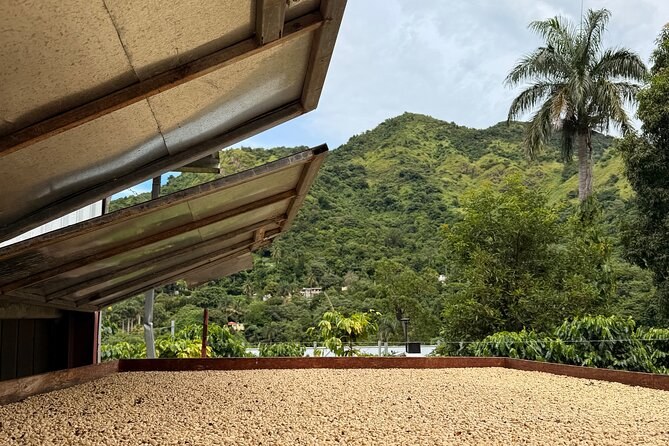
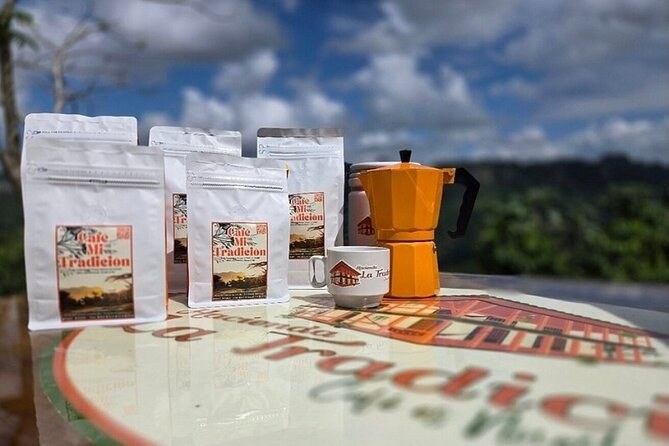
Hacienda La Tradición, Utuado
Where: off PR-140 at kilometre 33.5, above Utuado, in the central
mountains. A signed track drops off the road into the farm, and the surface stays
passable in a rental car.
What grows there: coffee, picked by hand in the harvest and processed
on site.
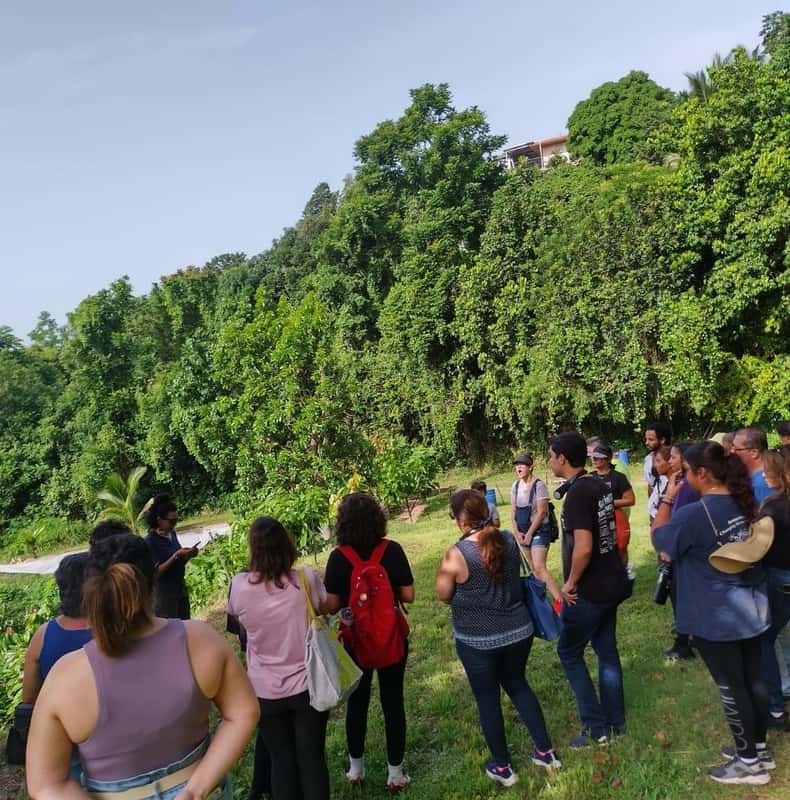
What a visit is: an hour and a quarter, capped at twelve travellers,
starting at ten in the morning. You watch cherries picked, peeled and dried the
traditional way, then drink the result.
Who runs it: the farm itself, through a local operator.
This is the cheapest way onto a working Puerto Rican coffee farm, and the only one where the fare is under fifty dollars.
Hacienda Prosperidad, Jayuya
Where: Jayuya, deep in the Cordillera Central, at the highest point
of the road system on the island.
What grows there: single-origin coffee, hand-picked cherry by cherry
and sun-dried.
What a visit is: two and a half hours on the farm inside an eight-hour
day out of San Juan. You roast your own green beans, grind them by hand and brew them
through a pour-over.
Who runs it: a family four generations into the same ground.
If you want to do the work rather than watch it, this is the one. The day also takes in a mountain waterfall and a country restaurant on the way back.
Hacienda Muñoz, San Lorenzo
Where: Carretera 181, kilometre 37, Barrio Quebrada, San Lorenzo, in
the eastern hills about an hour from San Juan.
What grows there: coffee, with a roastery, a café and a shop on
site.
What a visit is: its own 75-minute guided walk, Friday,
Saturday and Sunday only, at 10:00 in English and 12:00 and 14:00 in Spanish.
$21.99 for adults, $11.99 for children aged six to ten and visitors over sixty, plus
tax; under-fives free. First come, first served.
Who runs it: the hacienda's own staff.
The three-day rule is the thing people get caught by. The guided walk here runs Friday to Sunday and no other day. If you arrive on a Tuesday you can still buy coffee and sit in the café, but nobody will walk you round the farm. Pick your date first, then book. Opening times for every farm here.
Finca La Providencia, Moca — cacao, not coffee
Where: Moca, in the far north-west, about two and a half hours from
San Juan.
What grows there: fine aromatic cacao. No coffee at all.
What a visit is: two hours on foot, up hillside paths past a nursery,
compost beds and contour terraces, with a live harvesting demonstration and a tasting
that runs from raw fruit to finished bars.
Who runs it: the family who own the farm, who guide it themselves.
It is the highest-rated and most-reviewed visit in this list, and it is worth knowing that it is a chocolate day rather than a coffee one. If you want both crops, you need two bookings on two days.
Where the coffee gets drunk: Old San Juan
Almost none of the crop leaves the island — about 97 per cent is drunk here — so the other half of the story happens in the cafés. A three-hour guided walk through Old San Juan stops at two of them, puts a cortadito and a café con leche in front of you, and sets the island's coffee history against the buildings it paid for. It is the one way into the island's coffee with no farm and no drive.
Hacienda or finca — what the words mean
A hacienda is the old estate: land, house, mill and, historically, the labour that worked it. A finca is simply a farm, and today the two words get used loosely. What matters for a visit is what sits on the ground: a farm with a beneficio processes its own cherries, and a farm without one sells them on. Every farm named here processes its own.
After María: four fifths of the trees
In September 2017, Hurricane María destroyed roughly 80 per cent of the island's coffee trees and cost growers about $85 million. A coffee tree does not come back quickly — the first pruning cycle alone is seven or eight years — so the farms you walk today are working through a replanting that began with hundreds of thousands of seedlings handed out to family farms.
That is not background colour. It is why the crop is small, why so little of it leaves the island, and why several of these farms started selling visits at all. The island had 21,693 registered farms in 1899 and has around 4,737 now.
Which farm to pick
Distances and times as each operator and hacienda publishes them.
| If you want… | Go to | Where | Time on site |
|---|---|---|---|
| The cheapest way onto a coffee farm | Hacienda La Tradición | Utuado, central mountains | 1 hour 15 minutes |
| To roast and brew your own cup | Hacienda Prosperidad | Jayuya, central mountains | 2 hours 30 minutes |
| A farm you can visit without booking | Hacienda Muñoz | San Lorenzo, eastern hills | 75 minutes, Fri–Sun |
| Chocolate from pod to bar | Finca La Providencia | Moca, north-west | 2 hours |
| Coffee without leaving the city | Two old-city cafés | Old San Juan | 3 hours on foot |
Once you have picked a district, what a farm day actually looks like covers the rest, and the picking calendar decides whether you will see a harvest or a hillside. Every departure is listed on Puerto Rico Coffee Tours.
Tours that take you onto these farms