What You Learn on a Puerto Rico Coffee Tour
A coffee farm tour follows the bean, in order, from the tree to the cup in your hand. Six stages, and once you have seen them the vocabulary on a bag of coffee stops being marketing and starts being a description. This is what each stage is and what you will be looking at.
From flower to cherry
Coffee flowers white and smells like jasmine, and it does it for about two days. What follows is a small green fruit that takes six to nine months to ripen to deep red. That is the cherry, and inside it are two seeds facing each other — the beans.
The trees on any coffee farm tours in Puerto Rico you take are arabica: Caturra, Borbón and Limón are the varieties planted here. None of them is irrigated. The whole crop lives on the roughly 75 inches of rain the coffee region takes in a year, which is why the farms sit where the rain does.
Picking, and why it happens three or four times
Cherries on one branch do not ripen together. Pick the branch clean and you get green fruit in with the red, and the cup goes flat and grassy. So the same trees are picked three or four times across the season, by hand, taking only what is ready.
It is slow work. Three pickers cover about an acre in an eight-hour day. When you hear that hand-picked matters, this is what it means — not craftsmanship for its own sake, but the only way to keep unripe fruit out of the lot.
The pulper and the fermentation tank
Within hours of picking, the cherries go through a despulpadora, which squeezes the beans out of the fruit. What comes out is still slippery with mucilage, so it sits in a tank of water overnight while the sugars break down. Twelve to thirty-six hours, depending on the weather and how the farm likes it.
You can tell when it is ready by feel: the beans stop being slick and start being gritty. Every guide on the island will make you put a hand in.
The secadero — drying down to parchment
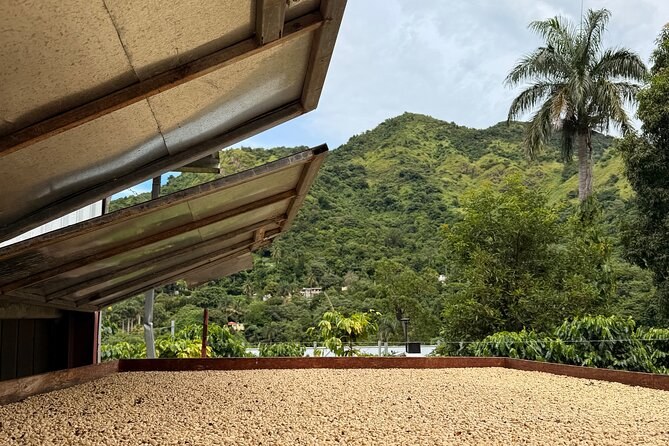
Washed beans go out on the secadero, the drying deck, still wrapped in a papery shell called parchment. They are raked every few hours so they dry evenly, and they come down when the moisture is right — roughly ten to twelve per cent. That is the pale gold layer you will see spread under a farm roof, and it is the image most people carry away.
Parchment coffee keeps. Farms store it in that state for months and only hull it shortly before roasting, which is why what you are shown in the store room does not look like coffee at all.
Roasting, and the last hour before a cup
Hulling strips the parchment and leaves green beans. Roasting takes them from green to brown in eight to fifteen minutes, and the sound is how it is judged: first crack is audible, and everything after it is a decision about how dark the cup will be. Grinding happens last, as close to brewing as possible, because ground coffee goes stale in minutes rather than weeks.
On one tour here you do all three yourself. On the others you watch, which is genuinely better for learning what the smell of a finished roast is.
Six Spanish words that make the rest make sense
| Word | What it means | Where you will meet it |
|---|---|---|
| Cereza | The coffee cherry, the fruit around the bean | In the picking rows |
| Despulpadora | The pulper that squeezes beans out of fruit | The first machine in the yard |
| Pergamino | Parchment — the papery shell around a dried bean | On the drying deck and in the store |
| Secadero | The drying deck itself, usually roofed | The pale gold floor in every photograph |
| Beneficio | The whole processing works on a farm | What separates a farm that finishes its own coffee from one that sells cherries on |
| Jíbaro | The mountain smallholder of Puerto Rican tradition | In every guide's story, usually untranslated |
Take that vocabulary onto a farm day and the whole thing lands differently. Which months you can see picking decides how much of stage two you actually watch. Every tour is on Puerto Rico Coffee Tours.
Tours that walk you through all of it