Puerto Rico Coffee Facts: Ten That Will Surprise You
Short answer. Puerto Rico was the sixth largest exporter of high-grade coffee in the world in the 1890s, sold about 15,000 quintals a year to the Vatican through the 1950s and 1960s, and lost roughly 80 per cent of its coffee trees in a single night in 2017. Almost none of the crop leaves the island today.
The coffee is the least famous thing about the island and it has the best story. Ten facts, each of them sourced, and most of them things the guide will tell you standing in the row they happened in.
1. Coffee arrived in 1736 and was the main crop within fifty years
It reached the island in 1736, and in 1755 a Spanish captain general handed seed to farmers at Coamo to try. By the 1780s coffee had overtaken tobacco as the island's main agricultural product. Exports went from 7,280 quintals in 1770 to 11,162 five years later — a quintal being a hundred pounds.
2. It was the sixth largest high-grade exporter in the world
By the 1890s Puerto Rico was the sixth largest exporter of high-grade coffee anywhere, and the fourth largest in the Americas. In 1898 the island produced and exported around 600,000 quintals, worth 13.9 million Spanish pesos. There were 843 registered coffee haciendas, spread across some 69 of its municipalities.
3. The Pope drank it, by the barrel
Through the 1950s and 1960s the Vatican bought about 15,000 quintals a year — one and a half million pounds of coffee, annually, for one household. Yauco's growers had been supplying Europe since the 1800s, and the phrase that stuck was the coffee of popes and kings. The guide on the walk through Old San Juan will tell you this one within the first ten minutes.
Did you know? The Corsican families who settled around Yauco and Maricao after 1815 are the reason the west of the island became coffee country. Their names are still on haciendas there.
4. One hurricane in 1899 took nine tenths of a harvest
Hurricane San Ciriaco hit in 1899 and did around $10 million of damage to the coffee fields, destroying 55 to 60 per cent of the crops and 90 per cent of that year's harvest. The industry never fully recovered its export position. It is the reason the island's coffee story splits neatly into before and after.
5. And another in 2017 took four fifths of the trees
Hurricane María, in September 2017, destroyed roughly 80 per cent of the island's coffee trees and cost growers about $85 million. A coffee tree does not come back quickly: the first pruning cycle alone is seven or eight years. The recovery began with hundreds of thousands of seedlings distributed to family farms, and those are the young rows you walk past today.
6. There were 21,693 farms in 1899 and there are about 4,737 now
That single comparison explains more than any other number here. What is left is smaller, more family-run and more likely to sell you a visit, because the visit is now part of how a smallholding survives.
7. Almost none of it leaves the island
About 97 per cent of the crop is drunk in Puerto Rico and under three per cent is exported. On top of that the island imports coffee to cover the gap between what it grows and what it drinks. This is why an estate bag bought at a farm gate is genuinely hard to find anywhere else — what to buy and how to carry it.
8. Nothing is irrigated
The whole crop lives on rainfall, about 75 inches of it a year across the coffee region, and the farms sit where that rain falls. It is also why the picking season and the wettest months are the same months.
9. The same tree gets picked three or four times
Not once. Cherries on one branch ripen at different rates, so pickers make three or four partial passes over the same rows between August and January, taking only what is red. Three pickers cover about an acre in an eight-hour day.
10. The varieties are Caturra, Borbón and Limón
All arabica, all suited to altitude, and all planted between roughly 760 and 1,200 metres. The high, cool, wet ground of the Cordillera Central is what the island's reputation was built on, and it is a two-hour drive from the beach.
The numbers in one place
Figures from published histories of the island's coffee industry and from post-hurricane recovery reporting.
| Fact | Figure | When |
|---|---|---|
| Coffee arrives on the island | — | 1736 |
| Exports | 7,280 quintals | 1770 |
| Registered coffee haciendas | 843 | from 1877 |
| World rank, high-grade coffee | 6th | 1890s |
| Peak export | ~600,000 quintals | 1898 |
| Crop lost to Hurricane San Ciriaco | 90% of the harvest | 1899 |
| Vatican purchases | ~15,000 quintals a year | 1950s–60s |
| Trees lost to Hurricane María | ~80% | 2017 |
| Registered farms | 21,693 then, ~4,737 now | 1899 / today |
| Crop consumed on the island | ~97% | today |
Where to see each of these on the ground
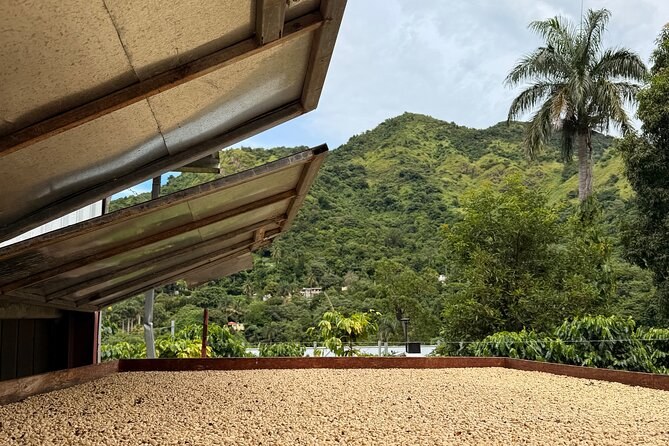
Most of this article is visible on a farm rather than in a museum. The picking passes, the lack of irrigation and the varieties are all in front of you in the rows. The 2017 story is in the age of the trees: young, uniform rows are replanting, and older gnarled ones survived. The export collapse is in the size of the operation you are standing on.
The Vatican and the 1890s are the guide's to tell, and the walk through the old city is where that half of the story lives — the buildings the coffee money paid for are still standing and still in use.
El acabe: how the island marks the end of a harvest
The end of the picking season has its own name, el acabe, and its own celebrations. Yauco runs the national coffee festival in February and Maricao holds its harvest festival in the same month; Jayuya's big event is its indigenous festival in November, which lands in the middle of the picking rather than after it.
Dates move year to year and organisers publish them a few months ahead, so treat these as a pattern rather than a diary entry. If a festival is the reason for the trip, check with the organiser before booking flights.
Three things people get wrong
- That Puerto Rican coffee is easy to buy abroad. Under three per cent is exported and the island imports to cover its own demand.
- That the coffee grows near the beach. It grows between roughly 760 and 1,200 metres, one to two hours inland.
- That the industry is old and unchanged. Most of what you walk past was planted after 2017.
What to do with all this
- Ask about 2017. Every farm has a version of that story and most are glad to tell it.
- Ask what a pound sells for. The answer explains why the visit exists.
- Buy at the gate. Three per cent export means what you taste is mostly unavailable at home.
- Go in the picking months if the history matters to you. Watching a crew work the rows makes the rest of this concrete — the calendar is here.
If any of this has made you want to stand in it, None start at $36 and the whole list is on one page.
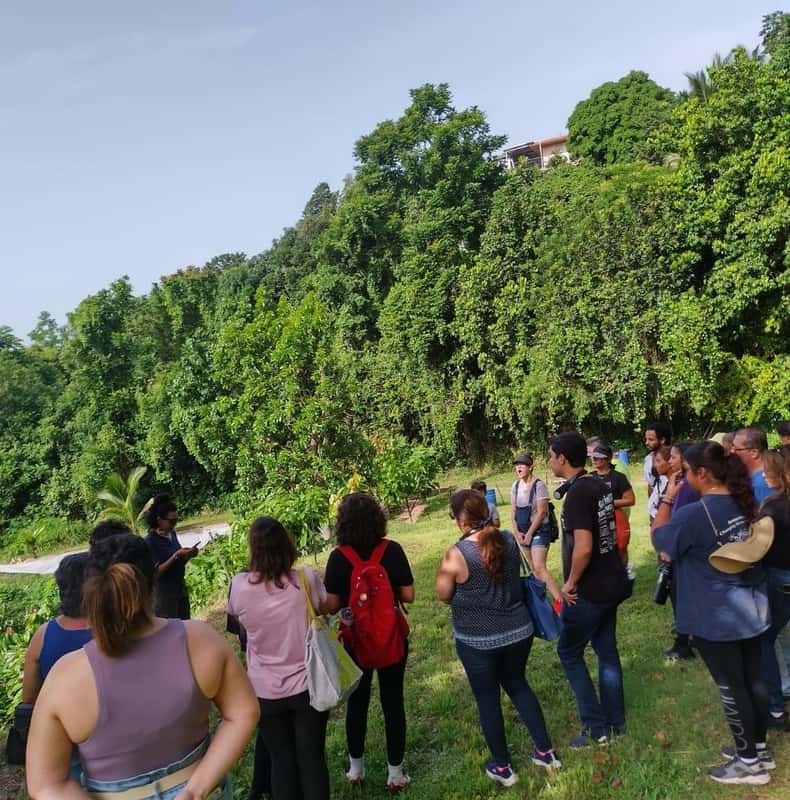
The farms in this article are the ones that replanted after 2017, and most of them now sell a visit. They are listed on Puerto Rico Coffee Tours.
Tours where these stories get told on the ground