Inside a Puerto Rico Coffee Hacienda: Station by Station
Short answer. A coffee hacienda is seven stations in a line: nursery, picking rows, pulper, fermentation tank, secadero, roaster and tasting table. Most of them sit within thirty metres of each other, and a good tour walks them in the order the bean travels. Allow twenty minutes for the yard alone.
The word hacienda suggests a great estate. What you actually walk into on the island today is smaller and far more interesting: a working farm where every stage of coffee production happens inside one fence, so you can follow a cherry from the branch to your cup without getting back in the van.
Station one: the nursery
Every farm starts here, and most visitors walk past it. Seedlings are raised in bags under shade for six to eight months before they go into the ground, and the varieties are the ones the island plants: Caturra, Borbón and Limón, all arabica.
The nursery matters more now than it did a decade ago. Hurricane María destroyed roughly 80 per cent of the island's coffee trees in September 2017, and the replanting that followed handed out hundreds of thousands of seedlings to family farms. The young rows you are looking at are that recovery.
Station two: the picking rows
Coffee flowers white, smells like jasmine for about two days, and then takes six to nine months to turn a small green fruit deep red. That fruit is the cherry, and there are two beans inside it facing each other.
Picking is by hand, and it happens three or four times across the season rather than once. The reason is simple and it is the thing to take away from the rows: cherries on one branch do not ripen together, so a single clean sweep would put green fruit in with red and flatten the cup. Three pickers cover about an acre in an eight-hour day.
Did you know? Picking here runs August to January, so between February and July the rows are green and the yard is quiet. That is a better tour for hearing the guide and a worse one for photographs. Which months show you what.
Station three: the pulper
Within hours of picking, cherries go through the despulpadora, which squeezes the beans out of the fruit and leaves the skins behind. It is a loud, wet, simple machine and it is usually the first thing in the yard.
Ask what happens to the skins. On the better farms they go back to the trees as compost, and on the cacao farms the equivalent waste becomes a tea you will be given later — the tastings page covers that one.
Station four: the fermentation tank
Pulped beans are still slippery with mucilage, so they sit in water for twelve to thirty-six hours while the sugars break down. How long depends on the weather and on how the farm likes its coffee.
You can feel when it is done. The beans stop being slick and turn gritty, and every guide on the island will make you put a hand in to check. It is the most memorable thirty seconds of the yard.
Station five: the secadero
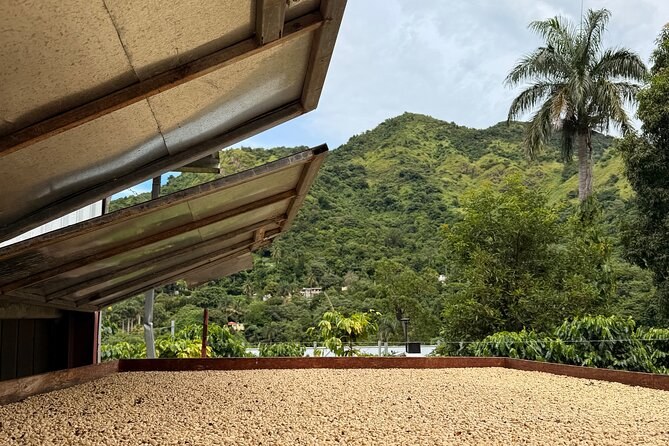
The secadero is the drying deck, usually roofed, and it is the image most people carry home: a pale gold floor of beans still wrapped in a papery shell called parchment. They are raked every few hours so they dry evenly and come off at roughly ten to twelve per cent moisture.
Parchment keeps. Farms store coffee in that state for months and only hull it shortly before roasting, which is why the sacks in the store room do not look like coffee at all. If you are wondering what half the photographs on the gallery page are of, this is it.
Station six: the roaster
Hulling strips the parchment and leaves green beans. Roasting takes them from green to brown in eight to fifteen minutes, and it is judged by ear as much as by eye: first crack is audible, and everything after it is a decision about how dark the cup will be.
On one tour on the island you do this yourself, with beans you have been handed raw and a hand grinder afterwards. On the others you watch, which is genuinely the better way to learn what a finished roast smells like.
Station seven: the tasting table
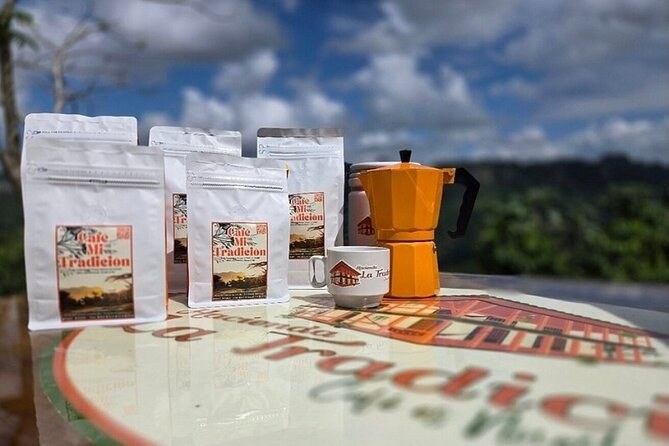
A small cup, black first, brewed from the estate's own crop within days of roasting. That freshness is the thing you cannot buy at home, and it is why people who arrive saying they do not like coffee leave with a bag of it.
The seven stations, and how long each one takes
Times as the tours here actually run them, not as a schedule.
| Station | What happens | Time on a typical tour |
|---|---|---|
| Nursery | Seedlings raised under shade for 6–8 months | 5 minutes |
| Picking rows | Hand picking, three or four passes a season | 15–30 minutes |
| Pulper | Beans squeezed out of the fruit | 5 minutes |
| Fermentation tank | 12–36 hours in water, sugars broken down | 5 minutes |
| Secadero | Drying to parchment at 10–12% moisture | 10 minutes |
| Roaster | Green to brown in 8–15 minutes | 10–30 minutes |
| Tasting table | The estate's own cup | 20–40 minutes |
What separates a good farm tour from a demonstration
- You handle things. Pulp, parchment, green beans, roasted beans. If nothing is put in your hand, you are watching a video with weather.
- The stations are in order. A guide who jumps from the roaster back to the picking rows has lost the thread the bean is supposed to give you.
- Somebody answers the awkward question. What happens in a bad year, what a pound sells for, why the farm sells tours at all.
- The coffee at the end is theirs. Not every farm can say that. All of the ones on None can.
Washed, natural and honey: the choice made at station three
What happens between the pulper and the drying deck decides most of what you taste, and it is the one thing a tour can show you that a bag of coffee cannot. Washed coffee — the island's default — goes through the pulper, ferments in water and dries clean, which gives a bright, clear cup. Natural coffee skips the pulper entirely: whole cherries dry on the deck and the fruit sugars work their way into the bean, which makes it heavier and sweeter.
Honey processing sits in between, with some of the mucilage left on. If a farm offers two lots at the tasting table, that difference is usually what separates them. Ask which one you are drinking and why the farm chose it, because the answer is always about weather and drying space rather than about fashion.
The beneficio, and why not every farm has one
A beneficio is the processing works: pulper, tanks, drying decks and store, all in one place. A farm with one finishes its own coffee and can sell it under its own name. A farm without one sells cherries to somebody who does, and never sees its coffee again.
Every farm you can visit here has a beneficio, which is not a coincidence. The visit exists because the farm finishes its own crop, and the finishing is what there is to show you. It is also why the whole chain fits inside one fence and takes ninety minutes to walk rather than a day to drive between.
Questions worth asking your guide
- How many passes did this row get last season? Three or four is the answer, and it opens up the whole picking economics.
- How long did this lot ferment? Twelve to thirty-six hours, and the reason it varied is the weather that week.
- What moisture do you dry down to? Ten to twelve per cent, and how they know is the interesting part.
- What did 2017 do here? Every farm has a version of that story.
- What do you drink at home? The most revealing question on any farm, anywhere.
Take the vocabulary with you
Six Spanish words do most of the work: cereza for the cherry, despulpadora for the pulper, pergamino for parchment, secadero for the drying deck, beneficio for the whole processing works, and jíbaro for the mountain smallholder every guide's story comes back to. The full glossary takes two minutes and makes the rest of the day land.
Two of the farms here put the roaster in your own hands. Both are listed, with their hours and their fares, on Puerto Rico Coffee Tours.
Tours that walk all seven stations